
✅ Is Finland Right for You?
Finland is likely a strong fit if you answer yes to most of these:
☐ You want one of the world’s highest quality of life, safety, and education systems
☐ You’re okay trading low taxes for world-class free healthcare, education, and social security
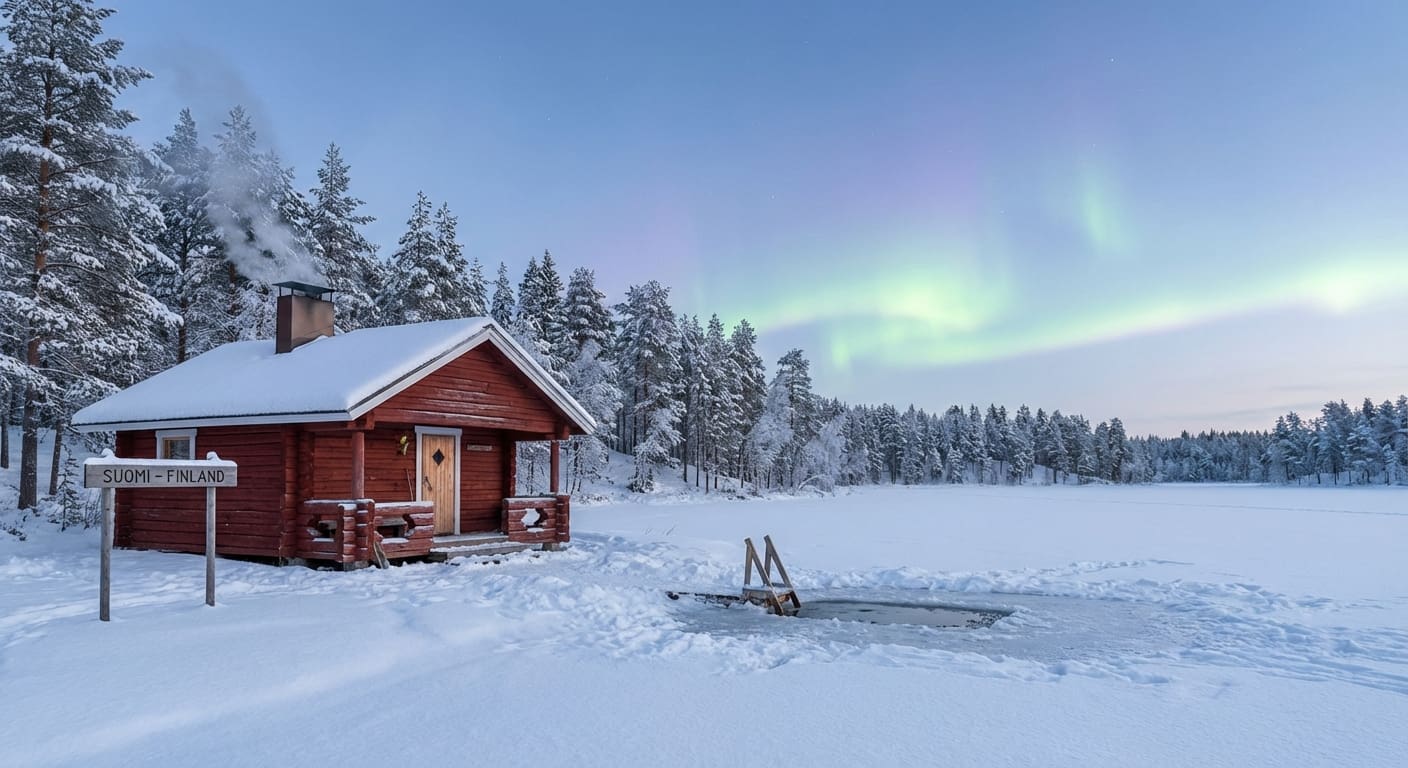
☐ You can handle long, dark winters — and ideally embrace sauna culture, skiing, and frozen lakes
☐ You work in tech, engineering, healthcare, clean energy, or another high-demand sector
☐ You value work-life balance over high salaries — Finns leave work at 4pm and mean it
☐ As a high-earning specialist: you’re excited that the Key Employee flat tax dropped from 32% to 25% in 2026
☐ You’re comfortable with a smaller English-speaking expat community outside Helsinki
☐ UK citizens: you understand post-Brexit you now need a residence permit like any other non-EU national
Finland has been named the world’s happiest country for eight consecutive years. It’s a title that seems abstract until you live it — universal free healthcare, tuition-free university, one of Europe’s lowest crime rates, pristine nature, and a government that actually functions. For expats willing to embrace the winters and the notoriously reserved Finnish social culture, it offers a quality of life that’s genuinely difficult to match anywhere. Vilnius was our previous guide’s dark horse. Finland is the quiet achiever of the Nordic region. This guide covers everything Americans, Canadians, and UK citizens need to know before making the move.
🏷️ Quick Facts: Finland at a Glance
| Capital | Helsinki |
| Currency | Euro (€) |
| Languages | Finnish, Swedish (both official); English widely spoken in cities and business |
| Population | ~5.6 million |
| EU & Schengen | Yes (EU since 1995, Schengen since 2001) |
| Top expat cities | Helsinki, Espoo, Tampere, Turku, Oulu |
| Visa-free entry (US/CA/UK) | Up to 90 days within any 180-day period (Schengen rules) |
| Path to permanent residency | 4 years continuous residence (new 2026 rules: integration requirements also apply) |
| Path to citizenship | 5 years total residence + language test + clean record (new 2026 requirements) |
| World Happiness Ranking | #1 for 8 consecutive years |
| VAT (standard) | 25.5% (food & restaurants: 13.5%) |
| Notable facts | 3.3 million saunas for 5.6 million people; 188,000 lakes; midnight sun in summer; polar night in winter |
📋 Visa and Immigration Routes
Finland is part of the Schengen Area, so US, Canadian, and UK citizens can enter visa-free for up to 90 days. For stays beyond 90 days, a residence permit is mandatory. Applications are submitted online via Enter Finland (enterfinland.fi) — the Finnish Immigration Service (Migri). The first permit application must be submitted before arriving in Finland (apply from your home country), with identity verification at a Finnish mission or VFS Global centre.
| Permit / Route | Who It’s For | Key Requirements | Duration / Path |
|---|---|---|---|
| Work-Based Residence Permit (Employed) | Non-EU nationals with a job offer from a Finnish employer | Valid employment contract; minimum gross salary of €1,600/month (Migri’s income requirement 2026); health insurance; passport; criminal record | 1–2 years renewable; path to permanent residency after 4 years |
| Key Employee Tax Regime | Highly qualified foreign specialists earning €5,800+/month | Special expertise; gross salary ≥ €5,800/month; not Finnish tax resident in previous 5 years; apply within 90 days of starting work | Flat 25% tax on salary (down from 32% in 2025) for up to 84 months (7 years) — major 2026 improvement |
| Startup Permit | Non-EU founders with an innovative, scalable business idea | Business plan evaluated by Business Finland; proof of sufficient funds; health insurance | 1–2 years renewable; access to Finland’s tech ecosystem and EU market |
| Self-Employment Permit | Freelancers and sole traders establishing a business in Finland | Viable business plan; proof of sufficient income and financial sustainability; YTJ company registration | 1–2 years, renewable; same PR path as employed workers |
| Study Permit | Non-EU students at accredited Finnish universities or colleges | Acceptance letter; proof of tuition payment or scholarship; ~€560/month living funds; health insurance (€30,000 coverage) | Duration of programme; limited work rights (25 hrs/week); post-study permit available for jobseeking |
| Family Reunification | Spouse/partner or children of a Finnish citizen or permit holder | Proof of relationship; sponsor’s permit or citizenship; income requirements (sponsor must earn sufficient income) | 1–2 years renewable; right to work usually granted; path to own PR |
| Other Grounds (Financially Independent) | Retirees or those with passive income who can support themselves without working | Proof of sufficient, stable income; comprehensive health insurance; applied at Finnish consulate | Renewable; no right to work; note: Finland has no formal retirement visa |
| EU Blue Card | Highly qualified professionals (degree or 5+ years experience) meeting salary thresholds | Employment contract of min. 1 year; salary at or above 1.5× Finnish average gross wage; health insurance | Up to 3 years; EU mobility rights after 12 months; accelerated PR path |
Since Brexit, British citizens are treated as non-EU nationals by Finland’s immigration system. You can still enter visa-free for up to 90 days (Schengen rules apply), but for any longer stay, you must apply for a full residence permit just like an American or Canadian. The main routes are work-based, self-employment, study, family reunification, or other grounds. If you moved to Finland and registered your residence before December 31, 2020, you are protected under Brexit withdrawal agreement terms — check your existing permit status with Migri if you’re already there. If you’re arriving now, you start from scratch like any non-EU national.
Finland does not offer a dedicated digital nomad visa. Remote workers employed by foreign companies have limited options: the 90-day Schengen allowance for short stays, or the Self-Employment or Startup permit if establishing a Finnish business. Working remotely for a foreign employer as a Finnish tax resident creates complex dual-country tax obligations — get advice before staying longer than 90 days.
💰 Financial Scenarios: What It Actually Costs to Live in Finland
Five realistic expat scenarios with full monthly breakdowns in USD. Finland is not cheap — but the value proposition is very different once you factor in free healthcare, free university for resident children, and comprehensive social security.
🏘️ Cost of Living: Finnish Cities Compared
| Expense | Helsinki | Espoo | Tampere | Turku |
|---|---|---|---|---|
| 1BR apartment (city centre) | €1,150–€1,450 | €1,200–€1,500 | €800–€1,100 | €750–€1,050 |
| 2BR apartment (city centre) | €1,700–€2,200 | €1,800–€2,300 | €1,200–€1,600 | €1,100–€1,500 |
| Meal at mid-range restaurant | €18–€30 | €18–€30 | €16–€26 | €15–€25 |
| Monthly public transport | €65 (zones AB) | €65–€125 | €52 | €50 |
| Beer (pub/bar) | €7–€10 | €7–€10 | €6–€9 | €6–€8 |
| Internet (fiber, monthly) | €25–€40 | €25–€40 | €25–€35 | €25–€35 |
| Heating (usually included in rent) | Most Finnish rental agreements include central heating — confirm before signing | |||
| Overall cost vs. London | ~47% lower | ~45% lower | ~55% lower | ~56% lower |
| Overall cost vs. NYC | ~20% lower | ~18% lower | ~35% lower | ~37% lower |
🏦 Finnish Tax System for Expats (2026)
Finland has a progressive tax system that surprises many expats with its headline rates — but the tax-funded services (free healthcare, free university, €105+/month child benefit, generous parental leave, comprehensive social security) change the real-world value calculation significantly. The 2026 tax year brought meaningful improvements for high-earning expats.
| Tax | Rate | Notes |
|---|---|---|
| State Income Tax (earned income) | 12.64%–44.25% | Progressive; applies to salary and business income; top marginal rate reduced to ~52% in 2026 |
| Municipal Tax | 4.7%–10.9% | Flat rate set by each municipality; Helsinki 5.3%, Espoo 5.5% — major cities tend to be lower |
| Employee Social Contributions | ~9.17% | Pension (7.15%), unemployment (0.89%), health insurance (0.84%); flat rate for all ages from 2026 |
| Key Employee Flat Rate ✨ | 25% (down from 32%) | Final withholding tax; requires ≥€5,800/month gross; special expertise; no Finnish residency in prior 5 years; valid 84 months max |
| Corporate Tax | 20% | Unchanged; competitive by Nordic standards |
| Capital Gains Tax | 30% / 34% | 30% on gains up to €30,000; 34% above; applies to shares, property, crypto |
| VAT (standard) | 25.5% | Included in all retail prices; food/restaurants 13.5%; books/hotels/transport 10% |
| Church Tax | 1%–2.25% | Optional; only if registered with Evangelical Lutheran or Orthodox Church — expats should confirm they haven’t been auto-enrolled |
The US–Finland tax treaty helps avoid double taxation, but it does not end your US filing obligations. US citizens must continue to file US returns annually, report foreign accounts via FBAR (FinCEN 114) if balances exceed $10,000, and potentially pay US tax on passive income the FEIE or foreign tax credits don’t cover. The FEIE (up to ~$126,500 in 2024) can exclude earned income from Finnish employment. However, given Finland’s high tax rates, in most cases your Finnish tax will fully cover US liability — but always file regardless. Hire a dual-jurisdiction CPA before your first Finnish tax year.
The UK–Finland double tax treaty remains in force post-Brexit, preventing dual taxation on most income. However, if you retain UK income (rent, investments, pensions), you must file HMRC returns as a non-resident. Critically: if you stop paying UK National Insurance (NI) contributions after leaving, you may accumulate gaps in your NI record that reduce your eventual UK state pension. You can make voluntary Class 2 or Class 3 NI contributions from abroad — strongly recommended if you have years still to build. Get advice from a cross-border UK/Finland accountant.
The reduction of Finland’s Key Employee flat tax from 32% to 25% in January 2026 is a major change. On a €8,500/month salary, this saves approximately €7,140 per year in income tax. The regime is final — no deductions allowed, but all Finnish salary income is simply taxed at 25% flat. It’s now more advantageous than the standard progressive rate for virtually all earners above the €5,800/month threshold. Apply within 90 days of starting work via Vero.fi — missing this window means you cannot access the regime that year.
🏥 Healthcare in Finland: Kela and the Finnish System
Finland’s healthcare system is one of the most comprehensive in the world. Once you’re a registered resident paying Finnish taxes, you’re covered. The key institution is Kela (Kansaneläkelaitos — the Social Insurance Institution of Finland), which administers health benefits, child allowances, parental leave, and more.
| Type | Cost to Expat | Notes |
|---|---|---|
| Public healthcare (Kela) | Small co-payments (~€15–40) | GP visits, specialist referrals, hospital care; available once registered and Kela-insured (typically after 6+ months’ residence) |
| Occupational healthcare | Free (employer-paid) | Employers legally required to provide occupational health services to all employees; often includes GP access without public queue |
| Private health clinic | €80–€180 per visit | Faster access, English-speaking doctors; major providers: Terveystalo, Pihlajalinna, Mehiläinen; costs partly reimbursed by Kela once registered |
| Private health insurance | €40–€150/mo | Required for permit application (€30,000 coverage); useful for first months before Kela eligibility; some expats keep it for private clinic access |
| Dental (public) | Co-payment ~€15–40 | Basic dental care available through public system once Kela-registered; private dental is also affordable by UK/US standards |
| Prescription drugs | Co-payment; Kela reimburses portion | Kela’s medicines reimbursement scheme covers significant portion of prescription costs once annual threshold is met |
You don’t automatically get Kela coverage the day you arrive. Eligibility is determined by your residence permit type and how long you’ve been registered. Employed workers are typically covered relatively quickly through their employer’s mandatory occupational healthcare. Self-employed, family, or “other grounds” permit holders may wait several months before qualifying. Maintain private health insurance (€30,000+ Schengen coverage) for the entire initial period. Register with Kela (kela.fi) as soon as you have your Finnish personal identity code (henkilötunnus).
🏙️ Choosing Where to Live: Finland’s Main Expat Cities
| City | Best For | Pros | Cons |
|---|---|---|---|
| 🏙️ Helsinki | Tech workers, startup founders, finance professionals, expat families | Best job market, excellent transport, international schools, airport hub, Maria 01 startup campus, most English-friendly | Most expensive Finnish city, competitive rental market, long dark winters feel starker in an urban setting |
| 🖥️ Espoo | Tech families, Nokia/Aalto professionals, those wanting suburb with city access | Aalto University, Nokia/Microsoft campuses, family-friendly, strong tech ecosystem, metro connection to Helsinki | Actually more expensive than Helsinki in some areas; less walkable/social without a car for suburbs |
| 🏭 Tampere | Researchers, academics, budget-conscious expats, families | 20–30% cheaper than Helsinki, strong university and research scene, between two lakes, more genuinely Finnish feel | Fewer international jobs and English-speaking roles, smaller expat community |
| ⚓ Turku | History lovers, Swedish-speaking Finns, those wanting coastal access and ferry connections | Oldest city in Finland, strong academic scene, coastal access, ferries to Stockholm, bilingual Swedish/Finnish culture | Fewer international employers, limited English-language services outside university |
| ❄️ Oulu | Engineers, Nokia 5G/6G professionals, outdoor enthusiasts, those wanting the authentic north | Major Nokia 6G research hub, cheapest of major cities, genuine northern lifestyle, Northern Lights nearby | Coldest and darkest major city, very small expat community, limited English outside Nokia campus |
🏠 Housing in Finland
Finland’s rental market is competitive in Helsinki but significantly more manageable in other cities. A unique Finnish feature: most apartment rentals include central heating (kaukolämpö), which dramatically reduces your actual winter costs compared to what you’d expect.
- Main platforms: Vuokraovi.com and Oikotie.fi — Finland’s main rental portals. Large rental companies Lumo and Sato often have quicker availability than private landlords.
- Deposits: Typically 1–3 months’ rent (returned when you leave). Landlords are regulated and returns are generally reliable.
- Finnish housing cooperatives (asunto-osakeyhtiö): Rather than owning an apartment, buyers own shares in the cooperative that owns the building. This is the standard ownership structure — important if you’re considering buying rather than renting.
- Heating included: Confirm whether rent includes district heating (kaukolämpö). If it does, your utility bill is primarily just electricity and internet — a major cost saving versus countries where you pay for heating separately.
- Arrive before committing: Book 4–6 weeks of temporary accommodation and explore neighbourhoods before signing a long-term lease.
🛂 Path to Permanent Residency and Finnish Citizenship (2026 Rules)
Finland significantly tightened its permanent residency and citizenship requirements in January 2026. These are now among the more demanding in the EU for non-EU nationals.
| Stage | Timeline | Key Details (2026 rules) |
|---|---|---|
| Temporary Residence Permit (A permit) | Year 0 | 1–2 years; tied to work, study, family, or other grounds; renewed via Enter Finland |
| Permanent Residence (P permit) | After 4 years | New 2026 integration requirements: must show work history, Finnish/Swedish language skills (level A2+), or completion of a Finnish degree. Multiple application paths with different combinations of these requirements. |
| EU Long-Term Residence (P-EU permit) | After 5 years | Requires 5 years lawful residence; sufficient financial resources; language skills required; grants EU mobility rights |
| Finnish Citizenship | After 5 years (new 2026) | 5 years total residence; Finnish/Swedish language test required; clean criminal record; sufficient income; knowledge of Finnish society |
| EU Blue Card accelerated track | 2 years in Finland (5 total EU) | Blue Card holders who have spent 5 years total in EU (min. 2 in Finland) can apply for P-EU permit |
The new January 2026 rules for permanent residency require proof of integration — specifically Finnish or Swedish language skills at level A2 or above, combined with a work history or Finnish degree. If you want permanent residency in Finland, start Finnish language classes immediately. Finnish is one of the world’s more challenging languages for English speakers (it’s in the same difficulty category as Japanese for native English speakers), so beginning early is essential. Free Finnish courses are available through local municipalities and the TE Services.
❌ 8 Common Mistakes When Moving to Finland
1. Underestimating the Finnish winter — especially the darkness
It’s not just cold — it’s dark. Helsinki in December gets about 6 hours of useable daylight. Oulu gets less. Many expats who struggle with winter do so not because of the cold (you adapt) but because of Seasonal Affective Disorder (SAD). Invest in a light therapy lamp before you arrive. Embrace outdoor activities — skiing, ice skating, winter swimming. Finns live through winter, not despite it.
2. Missing the 90-day Key Employee application window
If you qualify for the Key Employee flat tax regime (€5,800+/month, special expertise, no Finnish tax residency in prior 5 years), you must apply at Vero.fi within 90 days of starting work. Missing this window means losing access to the 25% flat rate for that tax year — potentially tens of thousands of euros in missed savings. Put this in your calendar for Day 1.
3. Not registering for your Finnish personal identity code (henkilötunnus) immediately
Your henkilötunnus (Finnish personal ID code) unlocks everything: banking, healthcare, Kela benefits, mobile contracts, subscriptions. You get it by registering with the Finnish Digital and Population Data Services Agency (DVV). Do this within the first days of arrival — without it, you’re effectively locked out of the Finnish system.
4. Accidentally joining the church (and paying church tax)
Finland automatically registers Nordic citizens into the Evangelical Lutheran Church when they move. As a foreigner this shouldn’t apply — but confirm you haven’t been registered. If you are registered, resign before December 31 via the Eroakirkosta service to avoid the church tax (1–2.25% of income) for the following year. A small but easily avoidable expense.
5. UK citizens applying as EU nationals (they’re not, post-Brexit)
Post-Brexit, British nationals are treated as third-country nationals by Finnish immigration. Attempting to register under EU citizen rules or assuming free movement rights will result in a rejected application. UK citizens must apply for a full residence permit via Migri, just like Americans or Canadians. Check your status at migri.fi before applying.
6. Not starting Finnish language learning before the move
Finnish is genuinely difficult. There are no Latin or Germanic roots to rely on. Most young Finns speak excellent English in cities — but Finnish is required for permanent residency (A2 level from 2026), many jobs, and navigating bureaucracy. Start with Duolingo or a structured course before you arrive. Your integration and social life will be significantly richer if you can manage even basic Finnish.
7. Applying for a residence permit in Finland rather than from abroad
The first residence permit must almost always be applied for before you arrive in Finland — at a Finnish embassy, consulate, or VFS Global centre in your home country. Arriving in Finland and then trying to apply for a first permit will, in most cases, not be possible and may jeopardise your legal status. Start the process from home, and be aware that processing times can be several months.
8. Misreading Finnish social culture as unfriendliness
Finns are famously quiet and reserved — especially to strangers, in public spaces, and on public transport. This is not rudeness; it’s a deeply embedded cultural norm around personal space and authenticity. Finns don’t make small talk, don’t fill silence, and don’t smile at strangers. But once a friendship forms, it tends to be genuine and long-lasting. Join sports clubs, local events, or work social activities — patience pays off enormously.
✅ Finland Relocation Checklist
Phase 1: Preparation (3–6 months before)
☐ Apply for your first residence permit from your home country via enterfinland.fi — do NOT arrive first and apply later
☐ Visit a Finnish embassy/consulate or VFS Global centre to verify identity and pay fees (€350–€500)
☐ Hire a dual-jurisdiction CPA (US/UK + Finland) to plan taxes before arrival
☐ Start Finnish language classes immediately — aim for A2 by permanent residency application
☐ Research Helsinki vs. Tampere vs. Turku for your lifestyle, budget, and employer
☐ Get health insurance with €30,000+ Schengen-wide coverage for your permit application
☐ UK citizens: check whether you qualify for voluntary NI contributions to protect UK state pension
☐ Open a Wise or Revolut multi-currency account for initial transfers
Phase 2: Logistics (1–3 months before)
☐ Research rental platforms: Vuokraovi.com and Oikotie.fi; contact Lumo and Sato for managed apartments
☐ Confirm whether rent includes district heating (kaukolämpö) — essential for winter budgeting
☐ Book international shipping quotes ($4,000–$12,000 from North America; £3,000–£8,000 from UK)
☐ Research schools if moving with children — Finnish state schools are free but in Finnish; international school options in Helsinki
☐ Invest in a SAD light therapy lamp before departure
Phase 3: Arrival (First month)
☐ Register with Kela (kela.fi) for healthcare and benefit eligibility assessment
☐ Open a Finnish bank account: OP, Nordea, or use Revolut/Wise as interim (bank requires henkilötunnus)
☐ Register with Vero (vero.fi) as a Finnish taxpayer; get your tax card (verokortti)
☐ If eligible for Key Employee regime: apply at Vero.fi WITHIN 90 DAYS of starting work
☐ Register with a local health centre (terveyskeskus) for public GP access
☐ Enrol children in school (koulutoimisto at your local municipality)
Phase 4: Settling In (Months 2–12)
☐ File US tax return (FEIE / foreign tax credit) — June 15 deadline for expats, October with extension
☐ File FBAR if applicable (FinCEN 114) — April 15, auto-extended to October
☐ UK: file HMRC self-assessment if you have UK income; review NI voluntary contribution decision
☐ Continue Finnish language classes — track progress toward A2 for permanent residency
☐ Build your residency evidence folder: permit cards, lease, utility bills, payslips (needed for PR in year 4)
☐ Set permit renewal reminder 3 months before expiry
☐ Embrace Finnish culture: get a sauna membership, try ice swimming (avantouinti), book a mökki (summer cottage), explore the national parks
📖 Glossary: Key Finnish Immigration and Tax Terms
| Migri | Finnish Immigration Service (Maahanmuuttovirasto) — the authority that processes all residence permit applications |
| Enter Finland | Migri’s online portal (enterfinland.fi) — where all residence permit applications are submitted |
| Henkilötunnus | Finnish personal identity code — required for banking, Kela, tax registration, and most Finnish services; obtained by registering with DVV |
| Kela | Kansaneläkelaitos — Finland’s Social Insurance Institution; administers healthcare benefits, child allowances, parental leave, housing benefits, and more |
| Vero / OmaVero | Finnish Tax Administration (Verohallinto); OmaVero (MyTax) is the self-service portal where you view/amend your pre-filled tax return |
| Verokortti | Tax card — determines the withholding rate applied to your salary; requested from Vero when starting a new job |
| Key Employee (Avainhenkilö) | Foreign specialist earning ≥€5,800/month who qualifies for 25% flat withholding tax (2026) instead of standard progressive rates; valid up to 84 months |
| A Permit | Continuous residence permit — the standard temporary residence document; basis for later permanent residency applications |
| P Permit | Permanent residence permit — available after 4 years with new 2026 integration requirements (language skills, work history) |
| DVV | Digital and Population Data Services Agency (Digi- ja väestötietovirasto) — where you register your address and receive your henkilötunnus |
| Kaukolämpö | District heating — Finland’s centralised heating system; most apartment rents include it, making winter utility bills lower than expected |
| Asunto-osakeyhtiö | Housing cooperative — Finland’s standard apartment ownership structure; buyers purchase shares rather than owning the physical property outright |
| Mökki | Finnish summer cottage — an iconic cultural institution; most Finns have access to one; rental mökkis available across the country for short stays |
| Maria 01 | Helsinki’s major startup campus (formerly a hospital complex); Northern Europe’s largest startup hub; key destination for Startup Permit applicants |
| FEIE | Foreign Earned Income Exclusion — IRS provision allowing US citizens abroad to exclude up to ~$126,500 of foreign earned income from US federal tax |
| FBAR | Foreign Bank Account Report (FinCEN 114) — required for US citizens with foreign accounts exceeding $10,000 at any point in the year |